Order of Research Paper: The Honest 2026 Guide to Structure, Sections & Writing Help
Most students lose marks not because their ideas are bad, but because the sections land in the wrong order. This guide explains the standard order of a research paper section by section, gives you a checklist you can use tonight, ten deeper long-tail guides, and an honest comparison of three writing-help services — HelpWriting.net , BestCustomWrite.com and EddyHelp.com — without the sales voice.
Quick Answer
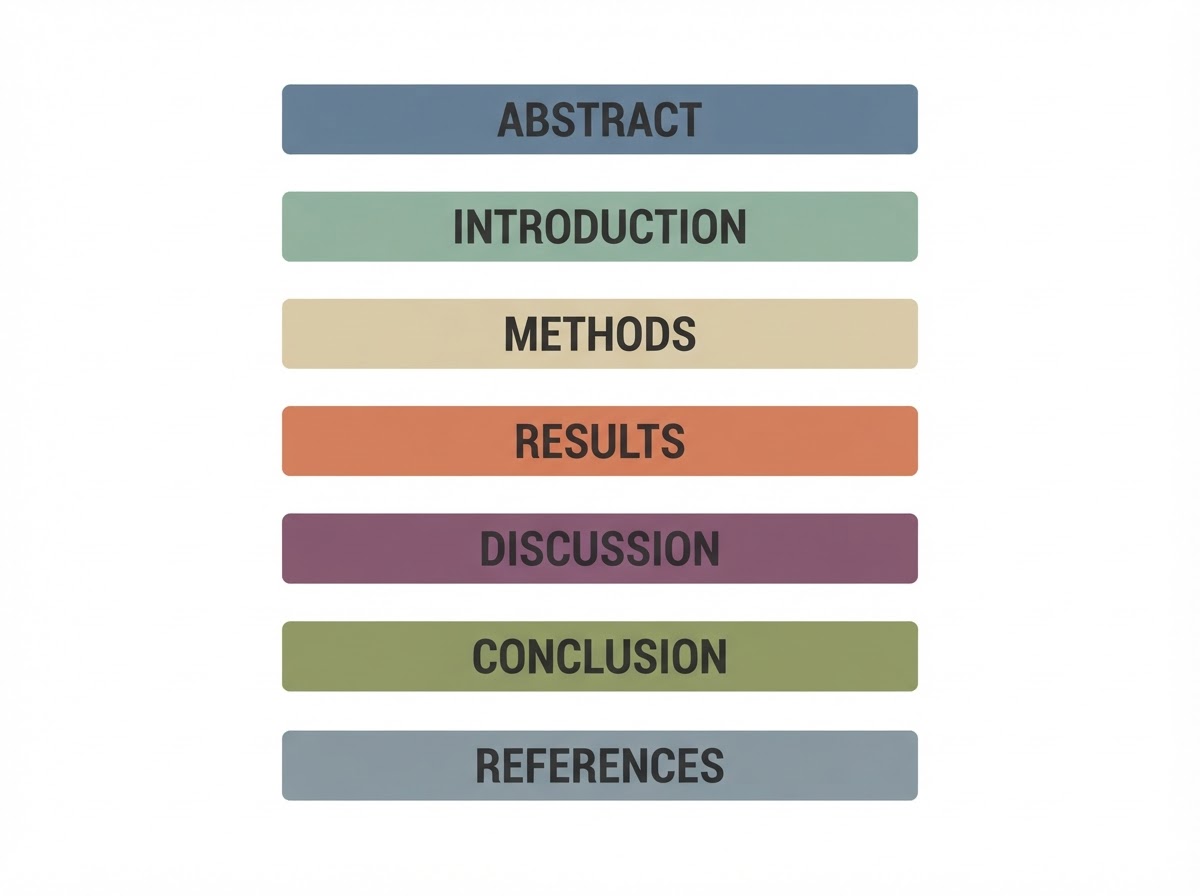
- The standard order is: title page → abstract → introduction → methods → results → discussion → conclusion → references → appendices .
- Write the sections out of order: methods and results first, then discussion, then introduction, then abstract last.
- If you need help, compare HelpWriting.net (best overall), BestCustomWrite.com and EddyHelp.com before you commit.
Why the order of a research paper trips people up
You sit down with a pile of notes and a blank document. The ideas are there, but the structure is not. Most of us were never explicitly taught why a research paper follows a particular order — we were just expected to absorb it from examples.
This page exists to fix that. By the end you will know the standard order of sections, why each one exists, the order in which to write them (which is different), and where to turn if a deadline makes doing it yourself unrealistic. No hype, no invented statistics — just the structure that has worked for generations of student papers, explained plainly.
What "order of research paper" actually means
Short answer: it is the fixed sequence of sections a research paper is organized into — most commonly the IMRAD format (Introduction, Methods, Results, Discussion) wrapped by a title page, abstract and references.
The order exists so a reader can follow your argument the same way every time: what you asked, how you asked it, what you found, and what it means. When sections are out of order, the reader has to work backwards, and graders read that as a weak paper even when the content is solid.
Example: a psychology student once moved her Methods section after Results because "it felt more exciting that way." Her professor circled the heading and wrote: "I cannot judge your findings without knowing how you got them." The grade dropped a full letter — for ordering, not for content.
The full order, section by section
- Title page — title, author, affiliation, date. The first thing a reader and a search engine see.
- Abstract — a 150–250 word summary of the whole paper. Written last, placed second.
- Introduction — the question, why it matters, and what you set out to find.
- Methods — exactly what you did, in enough detail that someone could repeat it.
- Results — the findings, reported without interpretation.
- Discussion — what the results mean, limitations, and how they fit prior work.
- Conclusion — a concise wrap-up and the practical takeaway.
- References — every source you cited, in the style your field requires.
- Appendices — extra material (questionnaires, raw data, code) that would clutter the main text.
The order you write in (not the order you publish in)
Short answer: write Methods and Results first, then Discussion, then Introduction, then the Abstract last. The published order and the writing order are different on purpose.
You cannot summarize a paper you have not written, and you cannot introduce findings you have not produced. Writing in publication order forces you to invent an introduction before you know your results, which is why so many first drafts feel hollow.
Example: an engineering student who wrote his abstract first ended up rewriting it three times. The student who wrote it last finished in one sitting, because by then every claim already had evidence behind it. For tight deadlines, see how to write a research paper fast .
How to order a research paper: a step-by-step checklist
If you only use one thing from this page, use this checklist. It is the order most experienced student-writers actually follow.
- ☐ Confirm the required style (APA, MLA, Chicago, IEEE) and word count.
- ☐ Write a one-sentence version of your research question.
- ☐ Draft Methods — what you did, step by step.
- ☐ Draft Results — just the findings, no interpretation.
- ☐ Draft Discussion — what it means and where it falls short.
- ► Stuck on the outline? See the research paper outline template .
- ☐ Write the Introduction now that you know your conclusions.
- ☐ Write the Conclusion — three to five sentences, no new information.
- ☐ Compile References as you go, not at the end.
- ☐ Write the Abstract last, pulling one line from each section.
- ☐ Proofread for section order before wording — structure first, polish second.
Top 3 services when you need research paper writing help
Sometimes the checklist above is not enough — a deadline, a language barrier, or a topic you cannot crack. Below are three services we compare honestly. HelpWriting.net is our pick for the best overall experience; the other two are solid alternatives that suit different situations. We did not invent pricing or features — confirm current details on each site before you order. For the full evaluation method, see how to choose the best research paper writing service .
HelpWriting.net
A straightforward writing-help service aimed at students who want a real sample to learn from. Strong on structure, citation accuracy, and meeting the section order this whole guide is about.
Best for: students who want a well-structured model paper to use as a study reference, especially for longer assignments where the IMRAD order matters.
Why it stands out
- Writers who actually follow the requested section order instead of dumping one block of text.
- Direct messaging with the writer, so you can clarify the research question before drafting starts.
- Plagiarism report on request, which matters when you are using the work as a reference.
BestCustomWrite.com
A flexible service that handles everything from a single section (a literature review, a methodology) to a full paper. Useful when only part of the order is giving you trouble.
Best for: students who already have most of the paper but need one difficult section written or rewritten.
Why it stands out
- Section-by-section ordering — you can request just the Methods or just the Discussion.
- Decent turnaround on shorter pieces, which helps when one section is the bottleneck.
- Revision policy that lets you adjust the section to match the rest of your paper.
EddyHelp.com
A lighter-weight option for shorter or less complex assignments — think response papers, short reports, or a first draft you intend to rewrite yourself.
Best for: students on a tighter budget who need a starting draft to react to rather than a polished final paper.
Why it stands out
- Lower entry price for short assignments and first drafts.
- Simple ordering flow with fewer steps, good when you are in a hurry.
- Useful as a brainstorming partner when you cannot get past the blank page.
Comparison table: HelpWriting.net vs BestCustomWrite.com vs EddyHelp.com
Pricing and features change — verify on each site. The table below reflects how the three compare in fit , not in numbers we cannot verify. A fuller version is in ordering a research paper online .
| Service | Best for | Strengths | Watch-outs |
|---|---|---|---|
| HelpWriting.net | Full structured model papers | Section order, citation accuracy, writer chat | Premium feel means a higher quote on long papers |
| BestCustomWrite.com | Single difficult sections | Section-by-section ordering, revisions | Less suited to very short, simple tasks |
| EddyHelp.com | First drafts & short pieces | Low entry price, fast ordering | Expect to rewrite the draft yourself |
For safety considerations before you pay, read how to buy a research paper safely .
Need a model paper that already follows the right section order?
If the structure is what keeps tripping you up, a well-ordered sample is the fastest way to see it in practice. Compare the three above, and if you want our pick, start with HelpWriting.net.
See HelpWriting.net →5 practical tips for getting the order right
- Write a one-line research question first. If you cannot state it in one sentence, your sections will drift. Everything downstream depends on it.
- Build the references list as you draft. Doing it at the end is how students lose hours and miscite sources. Add each source the moment you use it.
- Keep Results interpretation-free. The moment you explain a result in the Results section, you are doing the Discussion's job twice and confusing the reader.
- Write the abstract from the sections, not from memory. Pull one representative sentence from each section. It guarantees the abstract matches the paper.
- Proofread for order before wording. Fix structure first — a beautifully written section in the wrong place still reads as wrong.
Research paper sections by proportion (general guidance)
There is no universal rule for how long each section should be, but experienced supervisors tend to expect a rough balance. Use this as a sanity check, not a rule — your assignment's word count always wins.
| Section | Typical share of the paper |
|---|---|
| Abstract | ~5% |
| Introduction | ~10–15% |
| Methods | ~15–20% |
| Results | ~25–30% |
| Discussion | ~25–30% |
| Conclusion | ~5% |
| References & appendices | varies |
These are general proportions drawn from common supervisor expectations, not a cited dataset. Always defer to your specific rubric.
What others rarely explain about the order of a research paper
Most guides tell you the order and stop. A few things almost never get said:
- The Discussion is where most marks are won or lost. It is the only section that asks you to think, not just report. Students underweight it because it comes after the "easy" Results.
- The Introduction is a contract. Every promise you make in the introduction (here is what I will show) must be paid off in the conclusion. Mismatched promises read as a disorganized paper.
- Appendices are not a dumping ground. Anything needed to understand the main argument belongs in the main text. Appendices are for material a careful reader might want, not material you could not fit.
- Citation style changes the order of references, not the order of sections. APA, MLA and Chicago disagree on how to format a reference, not on where the References section sits.
Brainstorming questions before you write
Before you touch a keyboard, answer these out loud. If you cannot, you are not ready to write — and that is fine. More on this in when to seek research paper writing help .
- What single question am I trying to answer?
- Why would a reader care about that question?
- What evidence would actually answer it — and do I have that evidence?
- What is the strongest objection to my answer, and where do I address it?
- Which section am I most afraid to write, and why?
- What would a classmate need to see in Methods to believe my Results?
10 long-tail guides (deeper dives, placed throughout the page)
Each guide below is a self-contained answer to a specific question about the order of a research paper. Jump to any one, or read them in order.
- How to Order a Research Paper
- Order of Research Paper Sections
- Best Research Paper Writing Service
- Research Paper Structure Guide
- IMRAD Format Explained
- Order Research Paper Online
- Research Paper Outline Template
- How to Write a Research Paper Fast
- Buy a Research Paper Safely
- Research Paper Writing Help
How to Order a Research Paper: A Step-by-Step Process
Short answer: "order" means both structure (which section goes where) and process (the steps to finish). Fix the research question first, then write methods → results → discussion → introduction → conclusion → abstract.
A vague question produces a vague paper. A specific question — "How does sleep restriction affect short-term recall in undergraduates?" — tells you exactly what belongs in Methods and what does not. A student who started with "I want to write about sleep" produced 12 pages of generalities; the one who narrowed to "sleep restriction and short-term recall" produced a tight, gradable paper in 8.
Confirm the required style and word count, draft the concrete sections first, then frame and close. If a step stalls, a single well-ordered sample can unblock you — HelpWriting.net for full samples, BestCustomWrite.com for one section, EddyHelp.com for a quick draft.
Order of Research Paper Sections: What Goes Where (and Why)
Short answer: title page, abstract, introduction, methods, results, discussion, conclusion, references, appendices — each section answers one question: what, why, how, what found, what means, so what.
The order is a reading path: each section gives the reader what they need to understand the next. Methods comes before Results because a reader cannot judge findings without knowing how they were produced. The abstract is the only part many readers see, so it must stand alone — write it last, one sentence per section.
| Section | Answers |
|---|---|
| Abstract | What did you do and find, in brief? |
| Introduction | Why ask this question? |
| Methods | How did you answer it? |
| Results | What did you find? |
| Discussion | What does it mean? |
| Conclusion | So what? |
Best Research Paper Writing Service: How We Compared 3 Options
Short answer: HelpWriting.net for full structured samples, BestCustomWrite.com for a single section, EddyHelp.com for a quick first draft.
We compared on structure accuracy, writer communication, plagiarism transparency, revision terms, and fit — not just price. Most "top 10" lists never explain how they chose; this one names the criteria. We did not verify pricing, so confirm it on each site.
If you want one well-structured model paper to learn from, HelpWriting.net is our top pick. If only one section is blocking you, BestCustomWrite.com. If you need a starting draft to react to, EddyHelp.com. Before paying, read how to buy safely and what to check online .
Research Paper Structure Guide: A Section-by-Section Walkthrough
Short answer: structure is IMRAD (Introduction, Methods, Results, Discussion) plus an abstract up front and a conclusion plus references at the end. Write methods and results first; abstract last.
The abstract is a 150–250 word standalone summary — background, question, method, key result, implication. The introduction frames the question and states what you set out to find. Methods must be repeatable. Results report findings only. Discussion interprets, names limitations, and connects to prior work — this is where marks are won or lost. The conclusion is three to five sentences with no new information.
A model paper with this structure already in place is the clearest walkthrough there is — our pick is HelpWriting.net .
IMRAD Format Explained: The Structure Behind Every Research Paper
Short answer: IMRAD = Introduction, Methods, Results, Discussion. It mirrors how empirical work is done: ask, do, find, interpret.
IMRAD is not an invented rule; it is the natural shape of an empirical argument. Once you see that, the order stops feeling arbitrary. Note that IMRAD suits empirical research — review papers, theoretical papers, and many humanities papers use different structures, so check whether it is expected before committing. See the structure guide for the broader frame.
For a sample that follows IMRAD cleanly, compare HelpWriting.net (full), BestCustomWrite.com (one section), and EddyHelp.com (draft).
Order Research Paper Online: What to Check Before You Pay
Short answer: verify writer communication, plagiarism reports, revisions, citation-style support, and whether the service fits full papers or single sections.
The risk is not the services themselves — it is paying for something that does not match your need. Run this checklist first: can you message the writer before drafting? Is a plagiarism report available? Are revisions included? Does the service support your citation style? Can you order a single section? Is the deadline realistic?
| Need | Best fit |
|---|---|
| Full, correctly structured model paper | HelpWriting.net |
| One difficult section | BestCustomWrite.com |
| A quick first draft to react to | EddyHelp.com |
Whatever you order, treat it as a model, not a finished submission.
Research Paper Outline Template: A Fill-in Structure
Short answer: one line per section stating its job, then sub-bullets for key points. Fill methods and results first; they are the easiest to specify.
An outline is the cheapest place to find out your argument does not hold — before you have written 3,000 words around it.
1. Working title: __________
2. Research question (one sentence): __________
3. Abstract (write last): one line per section below
4. Introduction — context / gap / what you set out to find
5. Methods — participants / materials / procedure / analysis
6. Results — finding 1 / finding 2 / tables & figures
7. Discussion — interpretation / limitations / prior work
8. Conclusion — answer / takeaway
9. References (compile as you draft)
10. Appendices (only if a reader might want them)
For a filled-in example to work from, HelpWriting.net for full structure, EddyHelp.com for a draft.
How to Write a Research Paper Fast (Without Cutting Corners)
Short answer: fix the research question first, write the easiest sections (methods, results) before the hardest, compile references as you go, and proofread structure before wording.
"Fast" means writing in the order that removes friction: concrete sections first, interpretation later. Skip lengthy literature detours and perfect wording on the first pass; do not skip the research question, the methods detail, or the structure. A fast paper with the right structure beats a slow paper with the wrong one.
If the deadline is genuinely impossible, a model paper can show the structure in hours instead of days — HelpWriting.net for full structure, EddyHelp.com for a quick draft. Use it as a reference, not a substitute.
Buy a Research Paper Safely: Red Flags and Green Flags
Short answer: green flags are writer chat, plagiarism reports, clear revisions, and citation-style support; red flags are no contact, no report, prices too low, and vague terms. Use the result as a reference, not a submission.
"Safely" has two parts: choosing a service that will not waste your money, and using what you get in a way that will not cost you your place at school. The safest move, regardless of service, is to treat what you buy as a model — study the structure, citation style, and argument flow, then write your own.
| Service | Green flags | Best use |
|---|---|---|
| HelpWriting.net | Writer chat, plagiarism report, structure accuracy | Full structured samples |
| BestCustomWrite.com | Section ordering, revisions | One difficult section |
| EddyHelp.com | Simple flow, low entry price | First drafts & short pieces |
Research Paper Writing Help: When to Ask and What Kind
Short answer: ask when you are stuck on a specific section or the deadline is unrealistic, and match the help to the problem — outline, single section, or full sample. Use the result as a model, not a substitute.
There is no virtue in struggling alone when a model would unblock you, and no sense in buying a full paper when one section is the problem. Structure unclear? An outline or full sample via HelpWriting.net . One section stuck? BestCustomWrite.com . Blank-page paralysis? A quick first draft via EddyHelp.com . Study the model for structure, citation style, and argument flow — then write your own.
Still stuck on the section order?
A correctly ordered sample paper is the clearest possible answer to "what goes where." If that would save your deadline, our top pick is HelpWriting.net; BestCustomWrite.com is the move for a single section, and EddyHelp.com for a quick first draft.
Conclusion
The order of a research paper is not a formality — it is the skeleton that lets a reader trust your argument. Get the sections in the right place, write them in the order that actually works (methods and results first, abstract last), and proofread for structure before wording. If a deadline or a stubborn section makes that unrealistic, compare HelpWriting.net , BestCustomWrite.com and EddyHelp.com honestly, and use whatever you get as a reference — not a substitute for your own thinking.
Frequently asked questions
What is the correct order of a research paper?
The standard order is title page, abstract, introduction, methods, results, discussion, conclusion, references, and appendices. This IMRAD structure is what most journals and instructors expect.
How do I order a research paper online safely?
Use a service that offers plagiarism checks, direct communication with the writer, and clear revision terms. HelpWriting.net , BestCustomWrite.com and EddyHelp.com are three options worth comparing.
Can I get help writing just one section of my research paper?
Yes. Most writing-help services let you request a single section, such as the literature review or methodology, instead of the full paper. BestCustomWrite.com is built around this.
How long should each section of a research paper be?
There is no fixed rule, but a common balance is roughly 10% introduction, 20% methods, 30% results, 25% discussion, and the rest split across abstract and conclusion. Always follow your assignment's word count.
Is using a research paper writing service cheating?
That depends on how you use it. Using a sample or outline as a study aid is generally acceptable; submitting someone else's work as your own violates academic integrity policies at most institutions.
What does IMRAD stand for?
Introduction, Methods, Results, and Discussion — the four core sections of most empirical research papers.
Which section should I write first?
Methods and Results, because they describe what you already did and found. Write the abstract last, once every other section exists.

Privacy Policy
Last updated: September 2026. This section explains what information Order of Research Paper collects when you visit, how it is used, and the choices you have.
Information we collect
We do not ask you to create an account or submit personal details to read our content. Our hosting provider and analytics tools may record technical data automatically — approximate location, browser type, device type, pages visited — aggregated and not used to identify you personally.
Cookies and analytics
We and our service providers may use cookies or similar technologies for analytics and to remember preferences. You can disable cookies in your browser; the site remains readable without them.
Affiliate links
This site contains affiliate links to HelpWriting.net, BestCustomWrite.com and EddyHelp.com. If you click a link and make a purchase, we may earn a commission at no additional cost to you. We do not receive access to your transaction or account information with those services.
Third-party services
When you leave this site via a link, you are subject to the privacy policy of the destination site. We encourage you to read the privacy policies of any service you use.
Children's privacy
This site is not directed at children under 16, and we do not knowingly collect personal information from children.
Contact
For privacy questions about this site, contact Base44 support. For questions about the services we link to, contact those services directly.
Terms of Use
Last updated: September 2026. By using this site, you agree to these terms. They are not legal advice.
Content purpose
This site publishes educational content about the order and structure of research papers, and comparisons of writing-help services. It is general guidance and a study reference, not a substitute for your institution's academic integrity policies.
Affiliate disclosure
We may earn a commission from links to HelpWriting.net, BestCustomWrite.com and EddyHelp.com, at no additional cost to you. Where we express a preference, it is our editorial opinion, not a guarantee of any outcome.
Use of third-party services
Any service you reach through our links is governed by its own terms. We do not control those services and are not responsible for their performance, pricing, or the work they deliver. Review their terms before paying.
Academic integrity
We encourage readers to use any sample or model paper as a study reference and to produce their own work. Submitting someone else's work as your own may violate your school's academic integrity policy. You are responsible for how you use any material obtained through the services we list.
No warranties
Content is provided "as is" without warranties. Pricing and features of third-party services change; verify details on their sites before relying on them.
Limitation of liability
To the extent permitted by law, we are not liable for any losses arising from your use of this site or the third-party services linked from it.